


[Kurly's] Crispy Stir-fried Stone Kimchi 35g
URL이 클립보드에 복사되었습니다.
[Kurly's] Crispy Stir-fried Stone Kimchi 35g
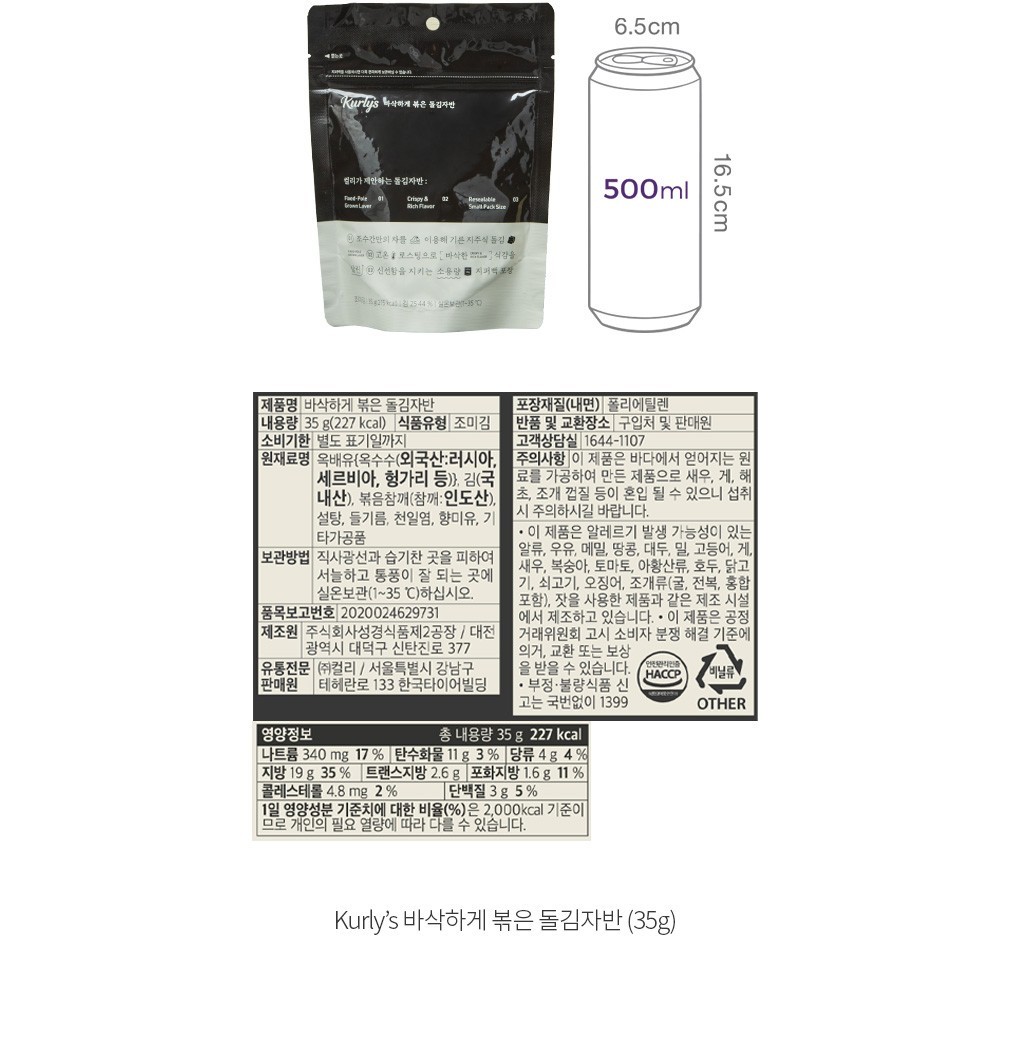
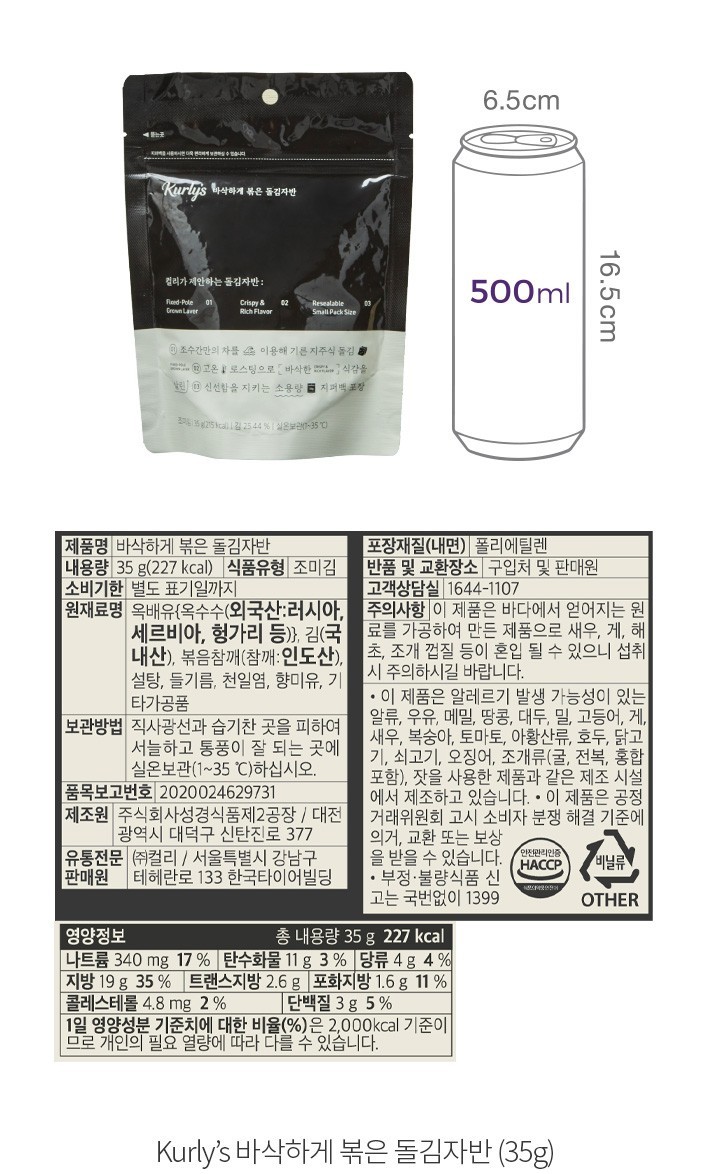
| origin | See product description/detailed information |
|---|---|
| Packaging type | Room temperature (paper packaging) For courier delivery, eco-packaging is replaced with Styrofoam. |
| Weight/Capacity | 35g |
| Sales unit | pole |
| Allergy Information | - This product is manufactured in the same manufacturing facility as products that use eggs, milk, buckwheat, peanuts, soybeans, wheat, mackerel, crab, shrimp, pork, peaches, tomatoes, sulfurous acid, walnuts, chicken, beef, squid, shellfish (including oysters, abalone, and mussels), and pine nuts, which may cause allergies. |
| Expiration date (or distribution date) information | We will send you products with at least 90 days remaining until their expiration date (total expiration date: 270 days). |
Couldn't load pickup availability

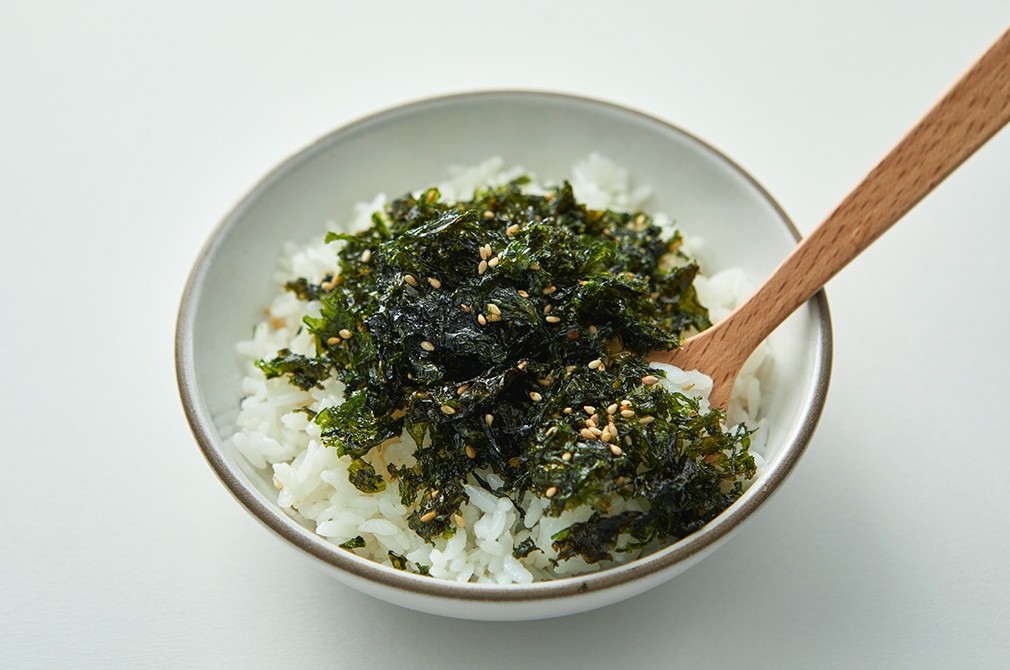
Crunchy Korean Stone Laver Flakes [Kurly's]
Crispy Roasted Stone Laver Flakes
Kimjaban (laver flakes) is a reliable 'rice thief' thanks to its delightful crunch and sweet-and-salty flavor. Enjoy an even crispier experience with Kurly's Stone Laver Flakes, a product developed in collaboration with Seonggyeong Foods, a company that has specialized in laver for decades. These flakes are made from Korean stone laver, cultivated using the traditional jiju-sik method*, and then roasted to a crisp at high temperatures. We've added freshly pressed perilla oil, sea salt, and sugar to complete its savory umami flavor. We deliver it in a small, resealable zipper bag, so you can easily sprinkle it on your dishes and enjoy.
*Jiju-sik Cultivation: A traditional cultivation method that utilizes tidal differences, allowing the laver, which was submerged in water, to naturally bask in the sunlight during low tide, thereby maximizing its inherent taste and aroma.
Meet Kurly's Stone Laver Flakes in advance with this video
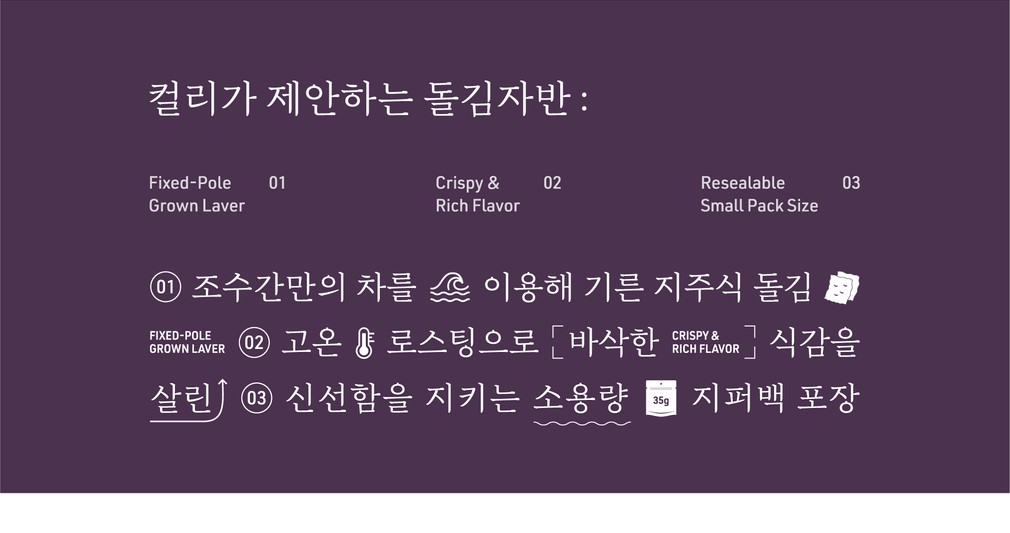

Crispy texture achieved through high-temperature roasting Kurly's Kimjaban is completed through roasting at temperatures over 200°C. Thanks to the well-formed air pockets within the laver during baking, it boasts an even crispier and more savory appeal. It uses Korean laver cultivated by the jiju-sik method, which retains its unique taste and aroma, as well as freshly pressed perilla oil and sea salt from New Zealand, making it exceptionally clean and fresh. Sprinkle it over white rice and enjoy the delightful crunch from the very first bite.
Kurly’s RecipeLayered Sushi

Ingredients (Serves 1: 8 pieces) 1/2 avocado, 300g rice, 5 tablespoons laver flakes, 1 teaspoon fresh wasabi, 90g sliced fresh salmon, 1 sprig dill, 1 lemon
・Sushi Vinegar Ingredients: 1 tablespoon vinegar, 1/2 tablespoon sugar, 1/4 teaspoon salt
RECIPE 1. Remove the pit from the avocado, peel it, and slice it 0.5cm thick.
Tip. Use a ripe avocado after ripening.
2. Mix the sushi vinegar ingredients into freshly cooked rice, combine thoroughly, and let it cool slightly.
3. Press 1cm of rice into a square mold, then evenly layer the avocado (from step ①) on top.
Tip. If you want to make well-shaped sushi, choose the [Doble] Musubi Gimbap Maker L sold at Kurly.
Tip. When adding rice, wet your spoon or spatula with water to prevent sticking and help shape the rice.
4. Press another 1cm of rice on top of step ③, then evenly sprinkle the laver flakes on top.
5. Press another 1cm of rice on top of step ④, then place fresh wasabi at 2.5cm intervals.
6. Evenly layer sliced fresh salmon on top of step ⑤, completely covering the rice.
7. Remove step ⑥ from the square mold and cut it into 2.5cm intervals.
Tip. Use a sharp knife and cut slowly to prevent the ingredients from crushing.
8. Garnish the finished sushi with dill and grate the peel of a washed lemon with a zester to finish.


Korean Seaweed Flakes with a Great Texture [Kurly's]
Crispy Roasted Seaweed Flakes
Seaweed flakes are a hearty rice thief with a light texture and a sweet and savory taste. Enjoy even crispier Kurly's Seaweed Flakes, developed in collaboration with Seonggyeong Food, which has been researching seaweed for decades. They are made by roasting Korean seaweed, cultivated using traditional jiju-style aquaculture*, at high temperatures until crispy. They are then seasoned with freshly pressed perilla oil, sea salt, and sugar for a savory umami flavor. We deliver them in small zipper bags, so you can easily take them out and sprinkle them over your dishes.
*Jiju-style aquaculture: A traditional aquaculture method that uses the ebb and flow of the tide, allowing the seaweed submerged in water to naturally receive sunlight during low tide, maximizing its inherent taste and aroma.
Meet Kurly's Seaweed Flakes in a Video


Crispy Texture Achieved Through High-Temperature Roasting Kurly's seaweed flakes are roasted at high temperatures over 200˚C. The air pockets formed between the seaweed during roasting give them an even crispier and more savory appeal. They feature Korean seaweed cultivated using jiju-style aquaculture, preserving its unique taste and aroma, along with freshly pressed perilla oil and New Zealand sea salt, resulting in a clean and fresh flavor. Sprinkle them over white rice and enjoy the delightful crispiness from the first bite.
Kurly’s RecipeLayered Sushi
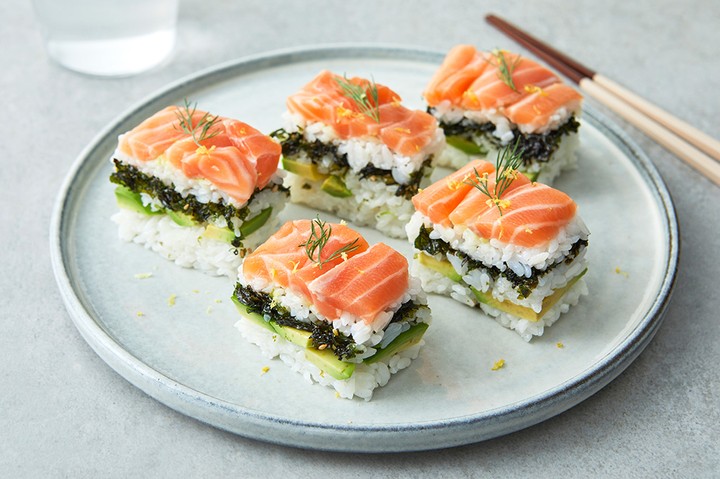
Ingredients (Serves 1: 8 pieces) 1/2 avocado, 300g cooked rice, 5 tbsp seaweed flakes, 1 tsp fresh wasabi, 90g sliced raw salmon, 1 sprig of dill, 1 lemon
・Sushi Vinegar Ingredients: 1 tbsp vinegar, 1/2 tbsp sugar, 1/4 tsp salt
RECIPE 1. Remove the pit and peel from the avocado, then slice it into 0.5cm thick pieces.
Tip. Use a ripe avocado after ripening.
2. Mix the sushi vinegar ingredients, add them to freshly cooked rice, mix well, and let it cool down to room temperature.
3. Press the rice into a square mold to a height of 1cm, then evenly layer the avocado slices from step ① on top.
Tip. If you want to make perfectly shaped sushi, try [Doble] Musubi Kimbap Maker L available at Kurly.
Tip. When adding rice, moisten your spoon or spatula with water to prevent the rice from sticking and help it shape well.
4. Press another 1cm layer of rice on top of ③, then evenly sprinkle the seaweed flakes over it.
5. Press another 1cm layer of rice on top of ④, then add fresh wasabi at 2.5cm intervals.
6. Evenly layer the sliced raw salmon on top of ⑤, completely covering the rice.
7. Remove ⑥ from the square mold, then cut it into 2.5cm intervals.
Tip. Use a sharp knife and cut slowly to prevent the ingredients from squishing.
8. Garnish the finished sushi with dill and grate the zest of a washed lemon over it to finish.
These are real reviews from Korean customers, written through July 2025.
California Proposition 65
⚠️WARNING: Consuming this product can expose you to chemicals including lead and cadmium which are known to the State of California to cause cancer and birth defects or other reproductive harm. For more information go to www.p65Warnings.ca.gov/food.
For more information, please visit www.P65Warnings.ca.gov/food.
