


[Jiyoomyungcha] Puerh Tea Bags 2 Types (1.5g x 20 pouches) (Select 1)
URL이 클립보드에 복사되었습니다.
[Jiyoomyungcha] Puerh Tea Bags 2 Types (1.5g x 20 pouches) (Select 1)
| origin | See product description/detailed information |
|---|---|
| Packaging type | Room temperature (paper packaging) For courier delivery, eco-packaging is replaced with Styrofoam. |
Couldn't load pickup availability

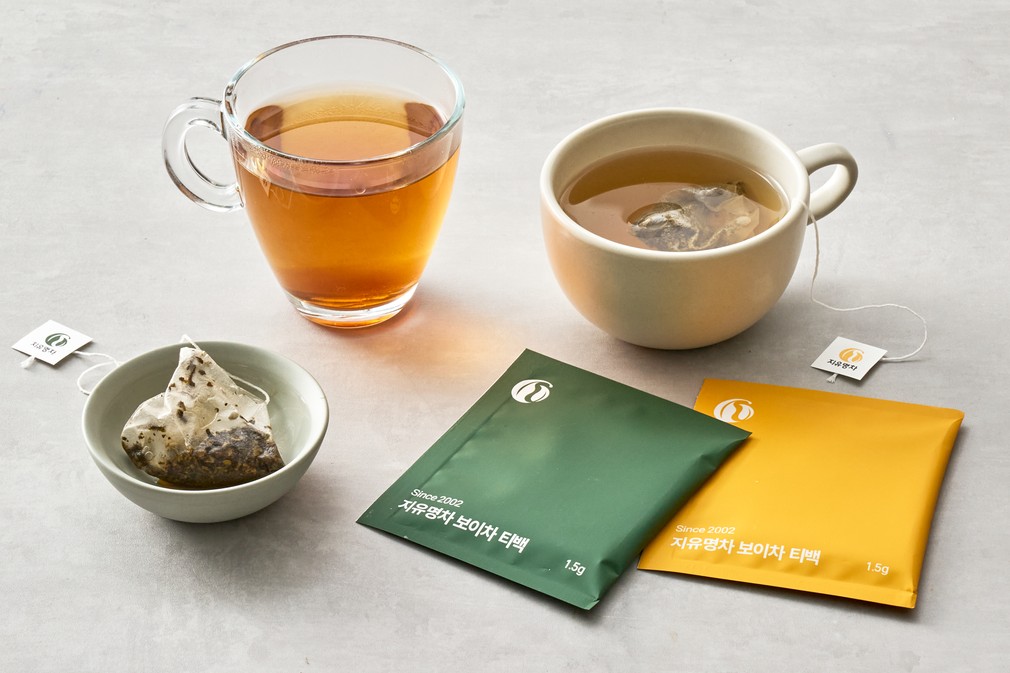
Pu-erh tea, brewed with ease
[Jiyumyeongcha]
2 Types of Pu-erh Tea Bags
-
 MD K
MD KPu-erh tea can be largely divided into raw (shengcha) and ripe (shucha) depending on whether it has undergone artificial fermentation. Choose the teabag that suits your taste and enjoy the subtly changing charm of pu-erh tea every day.
-
Editor C
Yunnan, China is renowned as the home and famous production area of pu-erh tea, isn't it? Perhaps because of the "Wuliangshan" in its name, Wuliangshan 17 has an even richer aroma.
-
Planner H
Samnyeon Ho-hap 15+ has a well-balanced flavor, thanks to its blend of ripe tea, raw tea, and Menghai ripe tea.
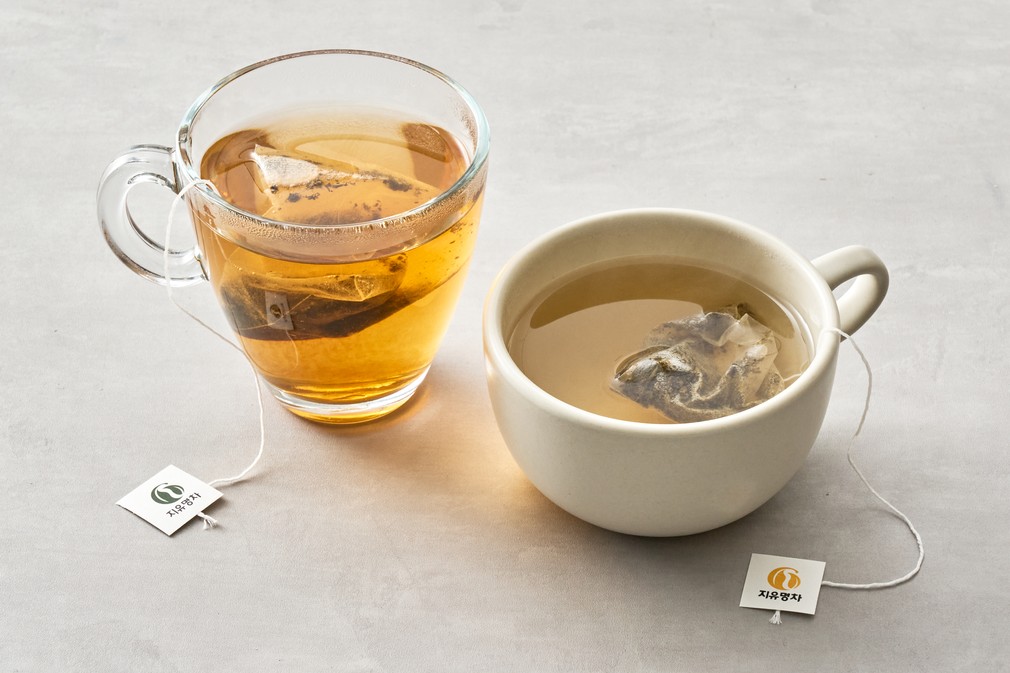
Fermentation of dormant tea leaves
Pu-erh tea can largely be divided into two types based on whether it undergoes artificial fermentation: raw tea (shengcha) and ripe tea (shucha). Shengcha is made by pan-frying tea leaves to stop oxidation, rolling them, drying them in the sun, then steaming them to press them into cakes. It then undergoes another drying process to be completed. Shucha, as the word implies, is tea that has been artificially fermented beforehand to accelerate its fermentation process compared to shengcha. Wuliangshan 17 contains shengcha, while Samnyeon Ho-hap 15 is a balanced blend of shengcha, shucha, and Menghai shucha. Choose according to your preference and enjoy the smooth taste of pu-erh tea.
A brand that fundamentally benefits people
Jiyumyeongcha
Jiyumyeongcha began in the spring of 2002, centered around a tea connoisseur club that enjoyed Pu-erh tea. Recognizing the difficulty of obtaining genuinely beneficial tea in Korea, they embarked with passionate drive to create an authentic Pu-erh tea brand. Jiyumyeongcha is the first in Korea to officially import Pu-erh tea after inspections by the Ministry of Food and Drug Safety. They handle only genuine Pu-erh tea through strict quality control. Their clear commitment beyond mere affection for handling only "true" tea stands out. Jiyumyeongcha continues to spread its delicate fragrance today with the belief that "anything that fundamentally benefits people is ours."
Easy-to-brew Pu-erh Tea
[Jiyumyungcha]
2 Types of Pu-erh Tea Bags
-
MD K
Pu-erh tea can be broadly divided into sheng cha (raw tea) and shou cha (ripe tea) depending on whether it has undergone artificial fermentation. Choose a tea bag that suits your taste and enjoy the changing charm of Pu-erh tea as you drink it daily.
-
Editor C
Yunnan Province in China is famous as the home and renowned region of Pu-erh tea, isn't it? Muliangsan 17, with Muliangsan in its name, seems to have an even richer aroma.
-
Planner H
Samnyeonhohap 15+ has a balanced taste thanks to the appropriate blend of shou cha, sheng cha, and Menghaeseong Chasi Sukbyeong.
Fermentation of lifeless tea leaves
Pu-erh tea can be broadly divided into two types: sheng cha (raw tea) and shou cha (ripe tea), depending on whether it has undergone artificial fermentation. Sheng cha is made by pan-frying tea leaves to stop oxidation, then rolling and drying them in the sun, after which steam is applied to the tea leaves to press them into shape. It is then dried once more to complete the process. Shou cha, as the name suggests, is tea that has been artificially ripened to accelerate the fermentation process compared to sheng cha. Muliangsan 17 contains sheng cha, while Samnyeonhohap 15 is a balanced blend of sheng cha, shou cha, and Menghaeseong Chasi Sukbyeong. Choose according to your preference and enjoy the mellow taste of Pu-erh tea.
A brand that fundamentally benefits people
Jiyumyungcha
Jiyumyungcha started in the spring of 2002, centered around a club of Pu-erh tea enthusiasts. Concluding that it was difficult to obtain beneficial tea in Korea, they passionately created an authentic Pu-erh tea brand. Jiyumyungcha was the first in Korea to officially import Pu-erh tea after passing inspections by the Ministry of Food and Drug Safety. They handle only genuine Pu-erh tea through strict quality control. Their clear determination and affection for dealing only with "true" tea are evident. Today, Jiyumyungcha continues to spread its delightful fragrance with the belief that "anything that fundamentally benefits people is ours."
![[지유명차] 보이차 티백 무량산 17 (1.5g X 20개입)](https://product-image.kurly.com/hdims/resize/%3E1010x/quality/90/src/product/image/f50f40d4-c719-458a-bc59-fba3687b4c6d.jpg)
![[지유명차] 보이차 티백 무량산 17 (1.5g X 20개입)](https://product-image.kurly.com/hdims/resize/%3E1010x/quality/90/src/product/image/3c8ccb90-baf4-4476-ae2c-71f4d7d5a804.jpg)
![[지유명차] 보이차 티백 삼년호합 15+ (1.5g X 20개입)](https://product-image.kurly.com/hdims/resize/%3E1010x/quality/90/src/product/image/9fe93a35-9ade-4a26-befb-6e7baaa2e7da.jpg)
![[지유명차] 보이차 티백 삼년호합 15+ (1.5g X 20개입)](https://product-image.kurly.com/hdims/resize/%3E1010x/quality/90/src/product/image/bc363fc5-2a94-4224-9a3e-2adad796234e.jpg)
These are real reviews from Korean customers, written through July 2025.
California Proposition 65
⚠️WARNING: Consuming this product can expose you to chemicals including lead and cadmium which are known to the State of California to cause cancer and birth defects or other reproductive harm. For more information go to www.p65Warnings.ca.gov/food.
For more information, please visit www.P65Warnings.ca.gov/food.
